

Sweet Autumn Clematis is a fall blooming clematis with fragrant white flowers. Get growing tips, pruning advice, and ideas to keep it in check.
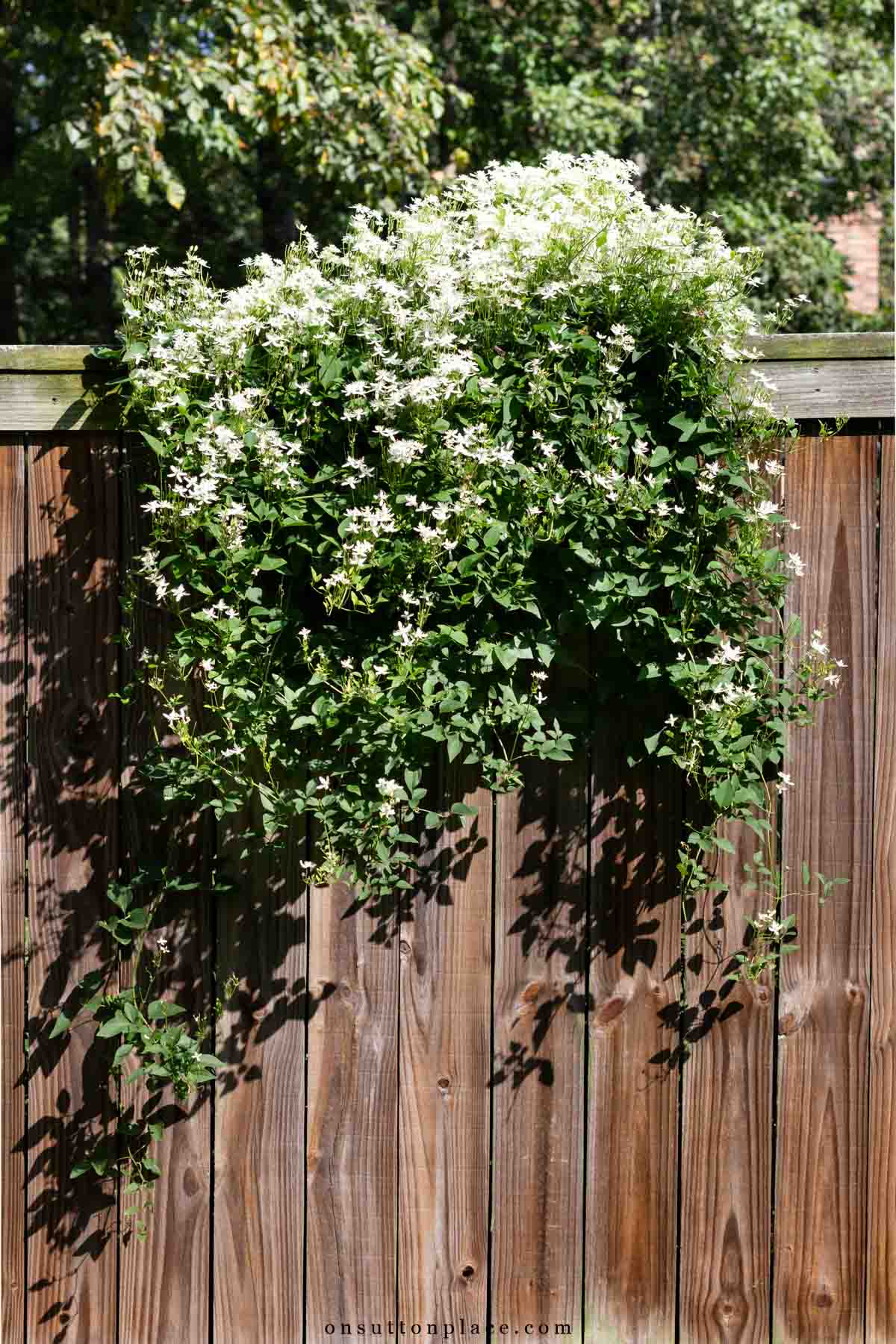
Several years ago, when we were still living at the house on Sutton Place, I had the idea to plant a Sweet Autumn clematis along the backyard fence. Like many garden plans, it never quite made it past the “someday” list. As luck would have it, my neighbor, Betsy, had planted one in her own yard. That summer, she tossed the top of the plant over the fence so I could enjoy it too. It was such a kind gesture, and that beautiful clematis turned out to be one of the highlights of my garden that fall.

This post may contain affiliate links. See my disclosure statement.
Why You’ll Love Sweet Autumn Clematis
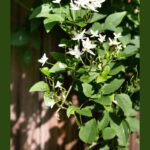
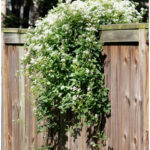
This variety of clematis truly shines when many other flowers have finished blooming. It begins flowering in late August and continues through September, sometimes even into early October depending on the weather. The dark green leaves provide the perfect backdrop for the delicate white blooms, which appear in clusters and seem to float along the vines. As the season progresses, the flowers transition into soft, silvery seed heads that look lovely in cut arrangements or tucked into fall décor.
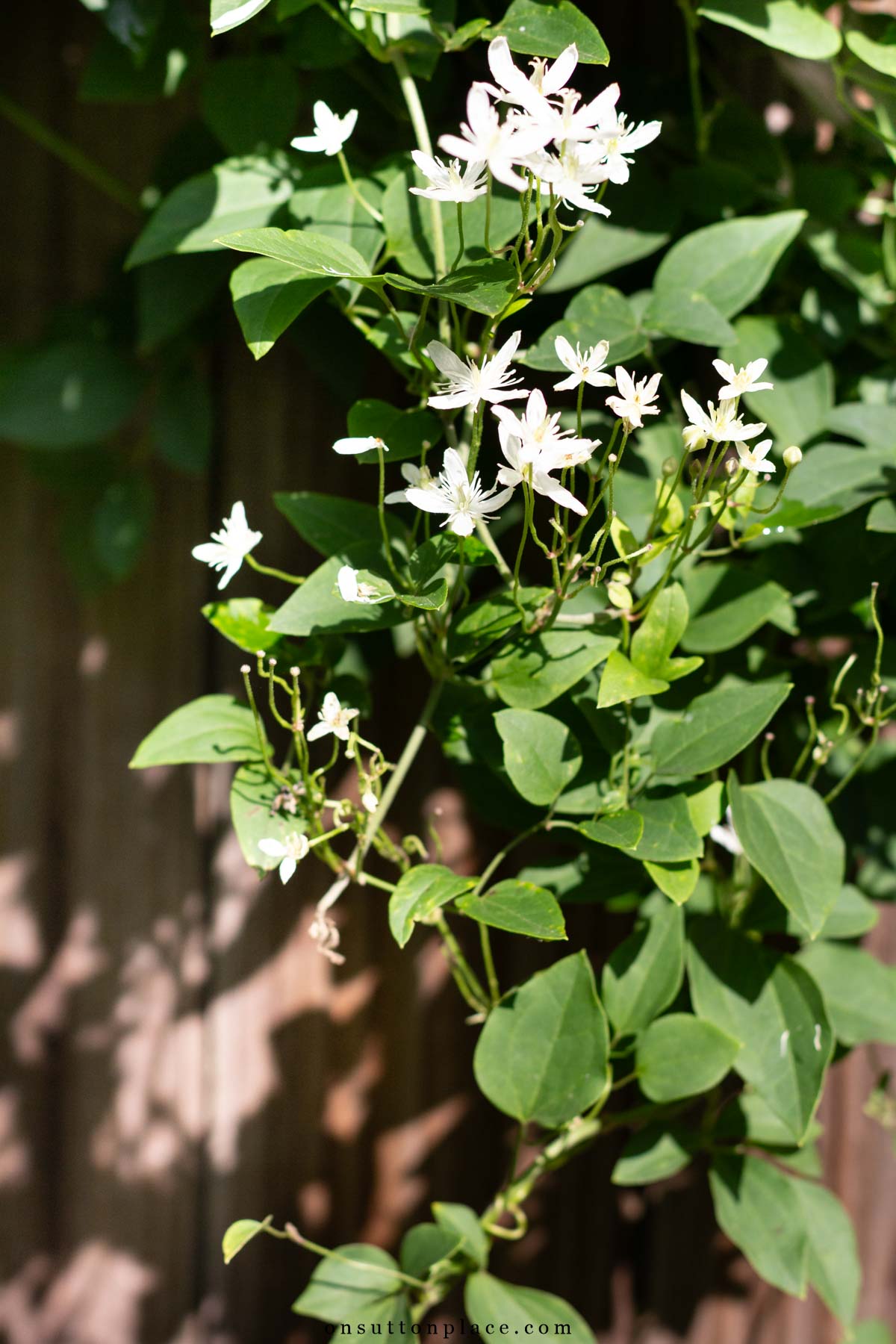
Growing Tips
- Light Requirements: Sweet Autumn Clematis is hardy in zones 5 through 10. It grows in full sun, but a bit of afternoon shade helps produce more blooms and keeps the vines healthier.
- Provide Strong Support: this clematis is a vigorous grower. By the second or third year, it really takes off. A sturdy fence, arbor, or heavy trellis is ideal. Without support, it will creep along the ground, which isn’t ideal and can lead to it taking over nearby plants.
- When to Prune: this clematis blooms on new growth, so it should only be pruned after it flowers. Late fall or very early spring are the best times. Cut the stems back to about 18 to 24 inches before new shoots appear. This keeps the plant from getting too leggy.
- Patience Pays Off: it may take a couple of years for Sweet Autumn Clematis to bloom, but once it settles in, you’ll be rewarded with an abundance of fragrant white flowers year after year.
- Winter Dormancy: the plant is deciduous, so expect the stems to be bare in winter.
- Propagation: it can be propagated through root cuttings in the spring or soft vine cuttings in early summer.
- Seed Heads: One of the unexpected joys of growing this fall blooming clematis is the way it keeps on giving. After the blooms fade, the seed heads can be harvested and used in fall flower arrangements or dried for crafts.
How To Keep It Under Control
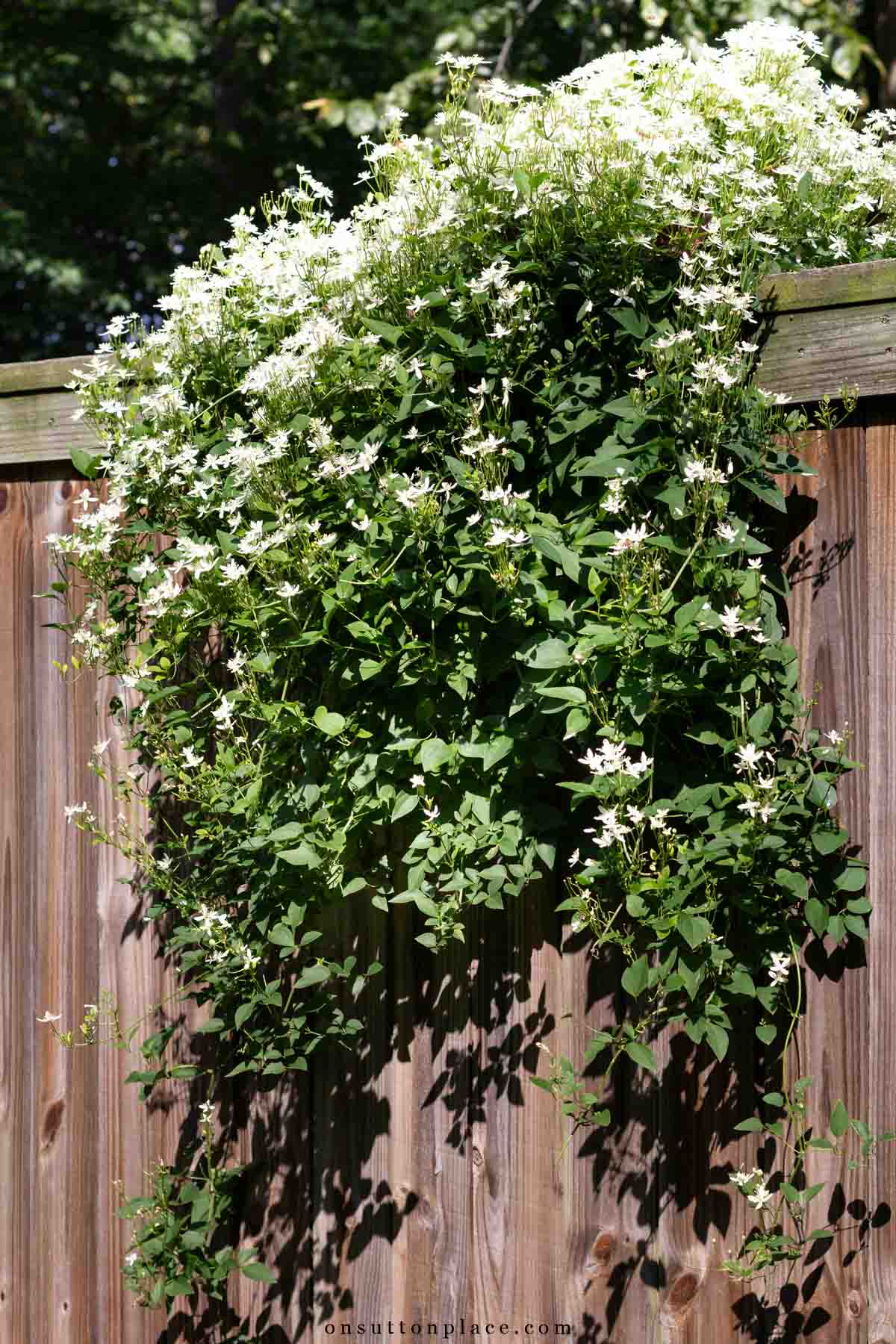
Sweet Autumn Clematis is known for its vigorous growth, and in some areas, it’s considered mildly invasive. Left unchecked, it can quickly spread and overtake nearby plants…but please don’t let this sway you from planting it. To keep it manageable, prune it back hard every year after it blooms. Removing seed heads before they scatter can also help reduce self-seeding. Make sure to plant it where it has plenty of vertical space to climb, and keep an eye on where the vines are traveling. With just a little attention, it’s easy to enjoy this plant’s beauty without letting it take over your garden. If you enjoy late season color in the garden, this fall clematis is a wonderful option. For more ideas on adding beauty to your outdoor spaces, take a look at this list of my favorite hardy perennials.

THE EVERYDAY GARDENER
The Everyday Gardener is packed with simple, practical tips
to help any homeowner create a beautiful, low-maintenance
outdoor space with confidence.



Thanks for sharing your Autumn Clematis pics and thoughts. I love mine! And will always have one in my yard. My first one didn’t survive a cold Indiana winter. Should I cover it after pruning?
Continuing to enjoy your emails….
Recently moved to the midwest from desert…love all your tips on pruning, etc.