


Rosemary is one of those herbs that looks beautiful, smells wonderful, and earns its place in everyday life. Even if you’ve never grown herbs before, rosemary is a great place to start because it’s hardy, forgiving, and easy to use in the kitchen.

This simple guide shows how to grow rosemary in containers, with tips for choosing the right pot, keeping plants healthy, and harvesting fresh sprigs as you need them. It also includes easy ways to dry rosemary and use it for cooking or tea, so your plant becomes something you reach for again and again.
This post may contain affiliate links. See my disclosure statement.
How to Grow Rosemary in Containers
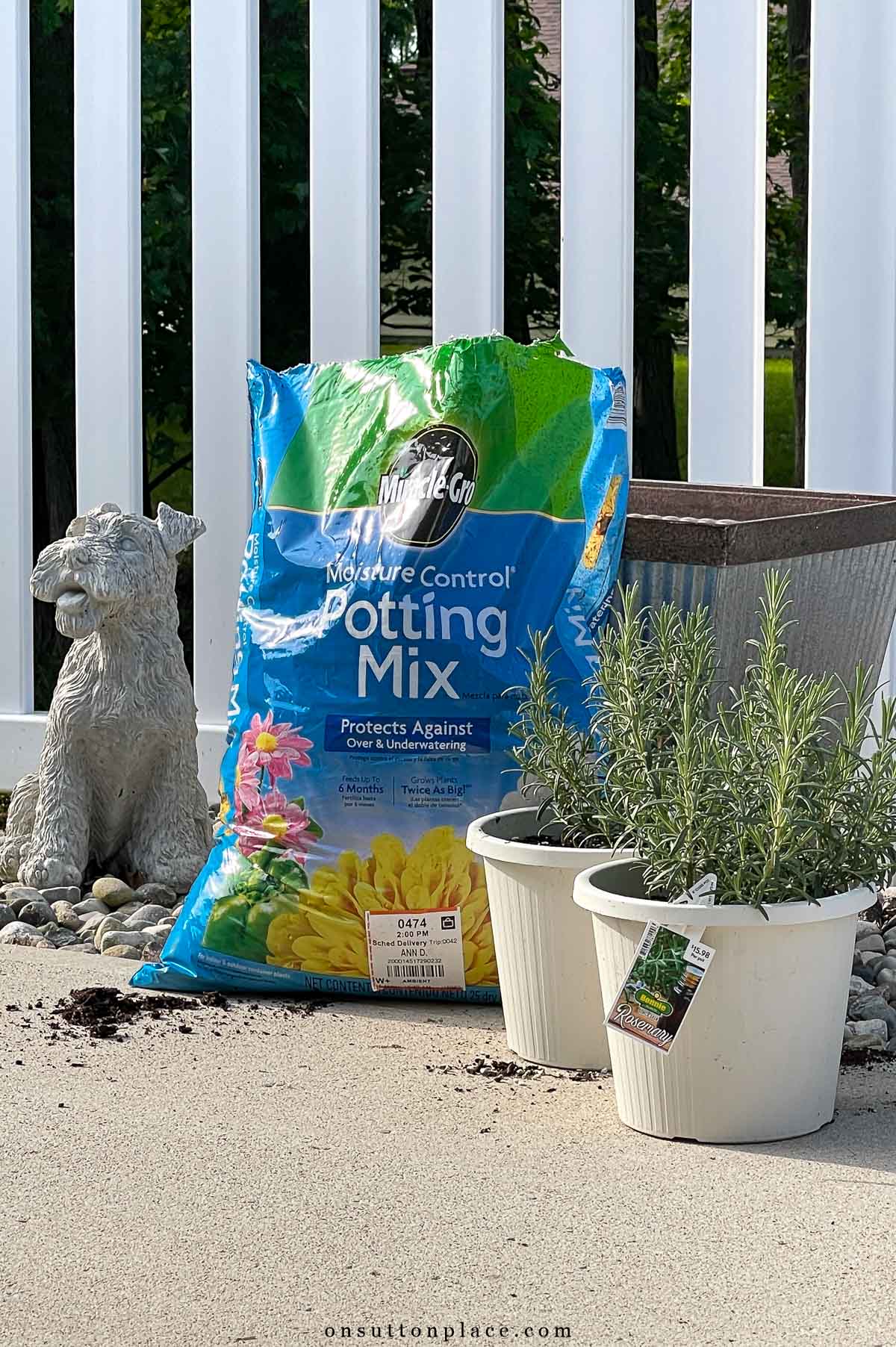
- Growing rosemary in containers is simple and a great option if you don’t have garden space. It’s easy to move the pot to follow the sun, and with just a little attention, rosemary does very well on a porch or patio.
- Start with a container that has good drainage. A pot with a drainage hole is essential because rosemary does not like wet soil.
- Choose a container that’s slightly larger than the plant you bring home so the roots have room to grow. Terra cotta pots are a good choice because they allow moisture to evaporate more easily.
- Fill your pot with a well-draining potting mix and place the plant at the same depth it was in its original container.
- After planting, give it a light watering and set it in a sunny spot. Rosemary grows best with several hours of direct sunlight each day, so a bright outdoor location is ideal.
How to Care for a Rosemary Plant

Caring for a rosemary plant is simple once you understand what it needs. The most important thing to remember is that rosemary prefers dry conditions and plenty of sunlight. If you give it too much water or keep it in low light, it will struggle. Rosemary grows best in well-draining soil and full sun. Place your container where it will get several hours of direct sunlight each day. When it comes to watering, less is more. Allow the soil to dry out before watering again, then water lightly. It’s always better to underwater than overwater, since rosemary does not tolerate soggy roots.

As your rosemary plant grows, you can trim it regularly to keep its shape and encourage new growth. Occasional trimming also gives you fresh sprigs to use in your kitchen. With the right balance of sun, soil, and light watering, rosemary is a low-maintenance herb that’s easy to keep healthy.
How to Harvest and Dry Rosemary

Harvesting rosemary is easy and can be done as soon as your plant has enough growth to spare. Use a pair of scissors or garden snips to cut a few sprigs at a time, taking them from the outer stems. This not only gives you what you need, but it also helps the plant stay full and healthy.

Fresh rosemary can be used right away, but it’s also very easy to dry for later use. To dry rosemary, gather a small bundle of sprigs and tie the stems together with twine. Hang the bundle upside down in a dry place with good air circulation. After a couple of weeks, the leaves will be completely dry and ready to use. Once dried, simply strip the leaves from the stems and store them in an airtight container. Keeping dried rosemary on hand is a simple way to add flavor to everyday meals.
How to Use Fresh Rosemary

- Fresh rosemary adds a simple, familiar flavor to everyday meals. One of the easiest ways to use it is to add a few sprigs to baked chicken and oven roasted potatoes. As it cooks, the rosemary infuses oven-baked items with a subtle, savory flavor.
- If you enjoy baking, add this homemade rosemary bread to your rotation. It pairs especially well with simple soups or salads, and fills the kitchen with the most wonderful aroma as it bakes.
- Make rosemary honey butter. Whipped together with honey and fresh rosemary, this simple spread is delicious on warm bread, biscuits, muffins, and scones.
- If you have extra rosemary to use up, there are a couple of simple options that go beyond cooking. Small rosemary wreaths are very charming and can be made with just a few flexible stems. They can be used on napkins, tied onto a gift, or displayed on shaker pegs. I have also tucked a single sprig of rosemary into a napkin bundle for a simple and classic touch. If you have especially long stems, use them in garden flower arrangments.
- Another favorite is rosemary salt. It’s easy to make and a nice way to preserve the flavor of fresh rosemary. Just combine about a tablespoon of fresh finely chopped rosemary with 1/2 cup kosher salt. Spread the salt/rosemary combination on a piece of parchment paper. Leave it out until the rosemary is completely dry. Store in an airtight container. If the rosemary is fully dried before storing, rosemary salt will keep for up to 6 months and still have great flavor.

How to Make Rosemary Tea
Rosemary tea is a simple way to use fresh rosemary and enjoy its light, herbal flavor. It comes together quickly and only requires a few ingredients. To make rosemary tea, place a small sprig of fresh rosemary in a cup and pour hot water over it. Let it steep for about 5 to 10 minutes, depending on how strong you like the flavor. Remove the sprig, and if desired, add a slice of lemon or a bit of honey. This is a nice option when you have extra rosemary on hand, and it’s an easy way to enjoy the flavor in a different way.

Rosemary Tea Benefits
- Rosemary tea is a light, herbal drink that’s easy to enjoy any time of day. It has a clean, fresh flavor and can be a nice change from more traditional teas.
- Many people enjoy rosemary tea as a simple way to slow down and take a quiet break. Served warm, it feels comforting without being heavy, and it pairs well with a slice of lemon or a touch of honey.
- It’s also a good way to use extra rosemary, especially when your plant is growing well and producing more than you need for cooking.

Simple Tips for Growing Rosemary
Rosemary is a low-maintenance herb once you understand what it needs. The most important thing to remember is that it prefers dry soil and plenty of sunlight. If you keep those two things in mind, your plant will do very well in a container.

If you’re planting rosemary with other herbs, it’s best to choose ones that like similar conditions. Rosemary pairs well with herbs like thyme and oregano, since they all prefer full sun and drier soil. It’s best not to combine it with herbs like basil or parsley, which need more moisture and can be affected by the drier conditions rosemary prefers. If you’re growing other herbs, you might also enjoy learning how to grow basil and how to grow mint in containers. With the right pot, good sunlight, and light watering, rosemary is an easy herb to grow and use. Whether you’re adding it to meals, drying it for later, or trying something new like rosemary tea, it’s a simple addition that fits easily into everyday life.
Shop & Source
- my linen kitchen towels
- similar linen kitchen towels (budget-friendly)
- little hanging basket
- round wood board
- chef’s knife
- cast iron skillet
- gold handled scissors
- herb garden marker
- vintage Liberty Blue china

5 Days To A Simpler, Calmer Home
A free five-day email course, one small idea a day,
for a simpler, calmer home. Finish the five days and
my seasonal guide is yours to keep.


amazon storefront
Discover simple and affordable
ways to refresh your home.

Great article. I love rosemary tea as a hair rinse. You make it the same way you make tea, and then I put it in the fridge for later use. It keeps my hair fresh, untangled and smelling amazing. I also hear it has great benefits for your scalp. I often mix rosemary and oregano together for a great hair tonic also.
This is so interesting. Thank you very much for sharing!
Thank You for the info I did not know to cut the outside leaves I have grown Rosemarry for years Thank You…..never to old to learn…..😉
Thank you for the tips. I didn’t realize I should be cutting the outside leaves first I enjoyed and liked all this information that I received from you. Thank you very much.